

Share
Composting with BSF larvae: Why, How, When?
Black soldier flies (BSF) are amazing insects that can significantly improve your composting process. Here is a comprehensive guide on using BSF for composting:
What are black soldier flies?
- - BSF (Hermetia illucens) are versatile insects originating from the Neotropics and are also commonly found in the southern part of Slovenia.
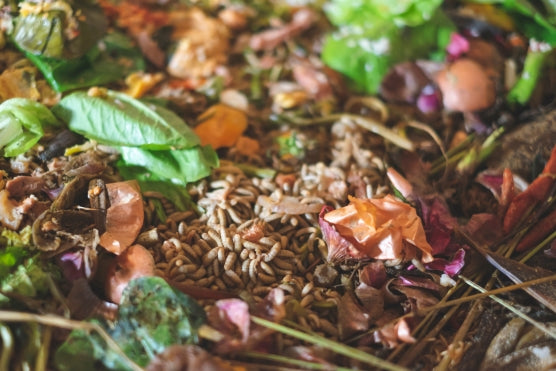
- - Adult BSFs resemble small black wasps, but they do not feed. Their larvae are decomposers that feed on various organic matter. BSF flies are not vectors of disease, do not have mouthparts, and do not bite.
- - BSF flies are very poor flyers and do not fly far from the place of transformation - your compost.
- - BSF larvae process manure, household food waste, and even carrion, absolutely all organic waste.
Composting with black army flies:
- BSF can process organic waste materials by converting them into nutrient-rich compost
- The entire life cycle of BSF is approximately 40 days (depending on air temperature).
- - It is best to start in the spring and continue until the end of summer. They do not overwinter well, so it is necessary to add larvae every year.
- - Provide a place to lay eggs, such as cardboard, or a 1-2mm slot, hung in your compost bin. BSF flies lay eggs near food.
- - By using BSF larvae, you can use the compost after just 20 days.
- - Larvae care:
- Build a home: Create a container to grow BSF or add them directly to a traditional compost bin.
- Substrate : It must be adequately moist and must not dry out.
- Balanced diet: Feed them a balanced diet Feed them a balanced diet (avoid using the same organic waste (large amounts of grass)) to ensure optimal development.
- Feeding rate: The recommended feeding rate is 0.5 kg of waste per day per pack.
Why use BSF larvae in composting:
- Nutrient-Rich Residue (Frass): BSF larvae produce a nutrient-rich residue called frass, which is an excellent addition to the soil. Frass has a high nitrogen and phosphorus content.
- Fast composting: BSF larvae speed up the composting process and reduce waste by up to 50%.
Making a BSF breeding container (DIY):
- Container: Choose a suitable container (plastic, wooden or metal) with drainage holes.
- Substrate: Line the bottom with straw or soil to retain moisture.
- Egg laying: Hang pieces of cardboard in your compost bin. The BSF flies will lay their eggs on it, which will fall into the compost and the larvae will start decomposing your waste again.
- Feeding: Provide the larvae with a varied diet (food scraps, manure, green clippings, etc.).
Remember, BSF maggots are efficient decomposers that turn waste into a valuable resource. Happy composting! 🌱