Črna vojaška muha

BLACK ARMY FLY

Hermetia illucens, the black soldier fly, is a common and widespread fly in the family Stratiomyidae. It is native to the United States of America, and was first observed in Slovenia in 2009.
MORPHOLOGY
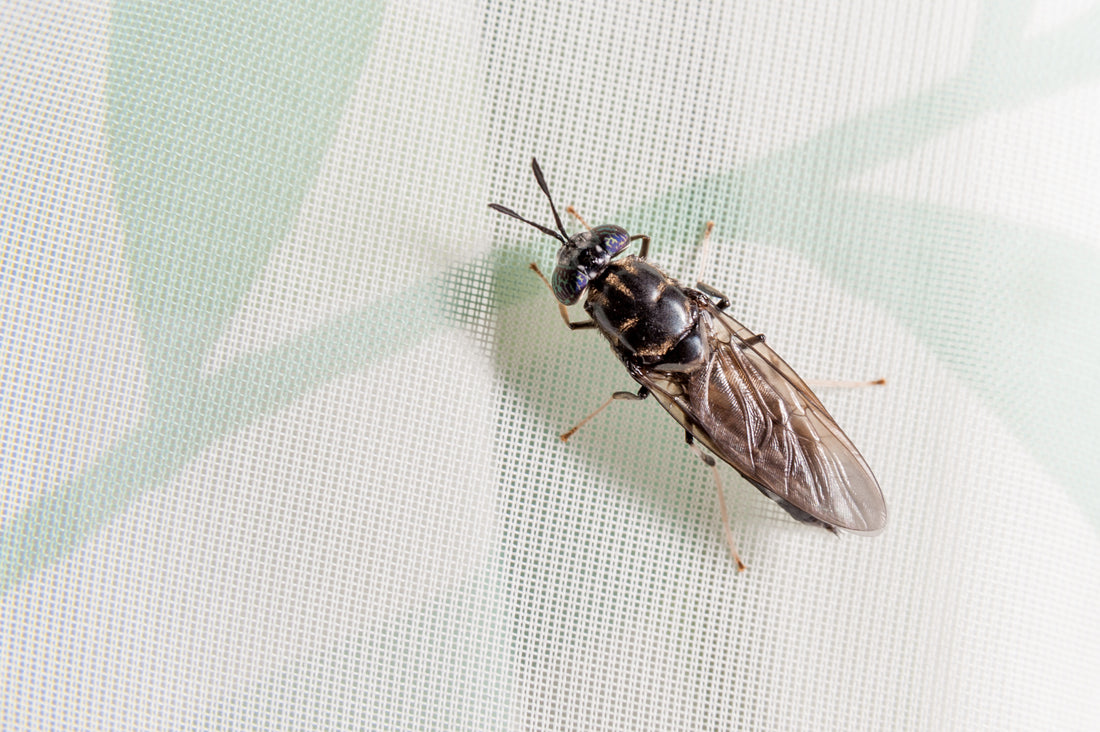
The adult black soldier fly (Hermetia illucens) is usually 8 to 15 millimeters in size and is found in our country from April to October. Their size is therefore similar to that of other common flies. They have a robust body that is covered in black or dark gray. Compound eyes and wings that are usually translucent and dark are characteristics of this animal species.

REPRODUCTION


Each female can usually lay several eggs (between 600 and 800) in a single litter (in manure, compost or carrion). The eggs of the black soldier fly (Hermetia illucens) are small and white and are laid in clusters. They are oval in shape and have a smooth surface and are usually attached to a suitable substrate on which the larvae (fly maggots) will later develop. Female black soldier flies usually seek out substrates that are rich in organic materials, as these materials will provide food for the developing larvae.
After the eggs are laid, the larvae hatch and quickly develop into fly maggots, which are known for their rapid growth and nutritional richness. This is a key part of the black soldier fly's life cycle, making it attractive for use in a variety of applications, such as animal feed and waste recycling.
After about four days, the eggs develop into larvae that feed on plant debris and carrion, which is why they are sometimes used to process plant and animal waste, as well as to control the population of the house fly ( Musca domestica ), since their larvae feed on the same food.


After 10 to 14 days, the larvae enter the final stage before pupation. After about 30 days, the larvae develop into adults.
The last stage larvae and pupae are used as food for various domestic animals, and are added to food for birds, poultry, fish, pigs, lizards, turtles, and dogs.
Since the late 20th century, the fly has attracted increasing attention due to its usefulness for recycling organic waste and producing animal feed.


Although quite small, black soldier flies play an important role in natural ecosystems and have also become of interest in various human activities due to their nutritional properties and environmental benefits.
LIFE CYCLE
  1. Life cycle of the black soldier fly:

    • Eggs: The life cycle of the black soldier fly begins with the adult flies laying small, white eggs on a suitable substrate on which the larvae will develop.
    • Larvae (flyworms): The eggs hatch into small black larvae called flyworms. These larvae are very nutritious and develop extremely quickly. At this stage, the flyworms actively feed on organic waste or previously prepared feed.
  2. Reproduction:

    • Adult flies are usually 8 to 15 mm in size. Females lay their eggs in a suitable environment with enough organic material to provide food for the larvae. Adult flies are usually black in color, have robust bodies, and compound eyes.
  3. Pupa:

    • When fly maggots reach a certain stage of development, they transform into pupae. At this stage, they enclose themselves in a hard shell known as the pupal shell. It is within this shell that internal metamorphosis takes place as the larvae transform into adult flies.
  4. Adult flies:

    • After a period of transformation from pupa to adult fly, the shell breaks and the adult flies emerge. Adult flies live only a few weeks and focus on reproduction. Their diet is quite limited, as they do not feed on organic waste or other materials at this stage.
  5. Uses of black army flies:

    • Animal feed: Fly worms, which are nutrient-rich and high in protein, have become an attractive alternative to traditional animal feed. They also contain important amino acids that are essential for animal health.

    • Waste recycling: Black soldier flies are extremely efficient at breaking down organic waste. They are used to process organic waste, such as food scraps from restaurants, households, and industry. In this way, they help reduce the amount of waste in landfills and contribute to more sustainable waste management.

    • Fertilizer: Fly maggot droppings, known as frass, are rich in nutrients and are an excellent natural fertilizer for plants. It is used in agriculture and horticulture to promote plant growth and improve soil fertility.

    • Biotechnology: Black soldier flies are also being studied in biotechnology applications such as environmental cleanup, genetics research, and use in medical and pharmaceutical research.

Together with their nutritional properties and efficiency in waste processing, black soldier flies have become important in terms of sustainable food production and environmental management.


Back to blog